
What Is Oxidation Resistance in Metals?
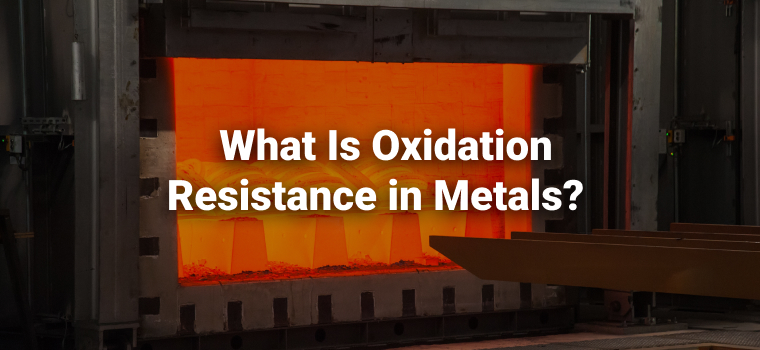
Oxidation resistance is a metal or alloy’s ability to resist reacting with oxygen, helping to prevent the formation of oxide scale and material degradation. This is particularly important in high-temperature applications, where oxidation can occur more rapidly.
Understanding how oxidation occurs, and the role different alloying elements play in protecting against it, is important when selecting materials for demanding environments.
Why Is Oxidation Resistance Important?
Oxidation resistance is particularly important where metals and alloys are exposed to elevated temperatures for prolonged periods. While protective oxide layers can help resist further oxidation, excessive oxidation can lead to scaling and material degradation over time.
Oxidation resistance is therefore an important consideration when selecting materials for demanding, high-temperature environments.
What Causes Oxidation in Metals?
Oxidation is the reaction of oxygen with an element in steel. The most common form of oxidation is rust. Rust itself is the build-up of thousands of molecules of iron oxide that form the reddish-coloured film on the surface of steels.
In stainless steels, a similar process happens, just not with iron. Instead, chromium in the base material of stainless steel combines with oxygen in the air to form a stable chromium oxide layer that protects the base material from the outside environment.
How Does Stainless Steel Resist Oxidation?
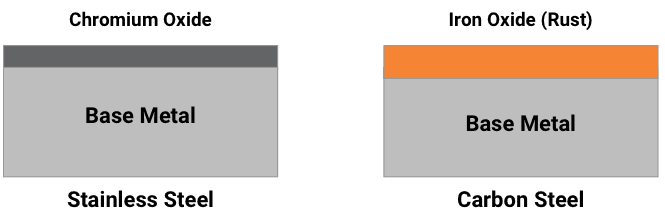
The oxide layer formed by stainless steel is much tighter and more adherent than the rust formed in other steels. This means it does not allow more oxygen to react with the elements in the base metal in the same way.
Rust, on the other hand, is porous and allows more oxygen to penetrate and continue the reaction.
The image below illustrates the difference between the protective chromium oxide layer formed on stainless steel and the iron oxide, or rust, that forms on carbon steel.
Can the Protective Oxide Layer Repair Itself?
While chromium oxide is much better than its rust counterpart, it is by no means impenetrable. Mechanical stresses, impacts or other voids can expose the base metal, allowing oxygen to penetrate further into the material.
As long as the material has more chromium in the base metal and has a source of oxygen, the oxide layer can typically repair itself.
Which Elements Improve Oxidation Resistance?
Chromium is not the only element that plays a role in the oxidation of stainless steels. Other elements, such as aluminium, silicon and rare earth elements like cerium, also play a role in the oxidation process.
Aluminium and Silicon
Silicon and aluminium help by individually creating a secondary oxide layer below the primary chromium oxide layer.
With large enough quantities of these elements, alloys like 602 CA® (2.2% Al) and 253 MA® (1.7% Si) can form secondary oxide layers that drastically increase the oxidation resistance of the alloy.
Cerium
While cerium helps in oxidation resistance, it acts in a different way. Instead of directly adding to the oxide formation on its own, it helps the oxide adhere to the base metal and promotes a thinner scale.
A good analogy for how cerium works in stainless steels is to think of it as anchor bolts for the protective chromium oxide layer.
Oxidation Resistance in High-Temperature Alloys
The composition of an alloy plays an important role in its oxidation resistance at elevated temperatures, with elements such as chromium, aluminium, silicon and cerium contributing to the formation or stability of protective oxide layers.
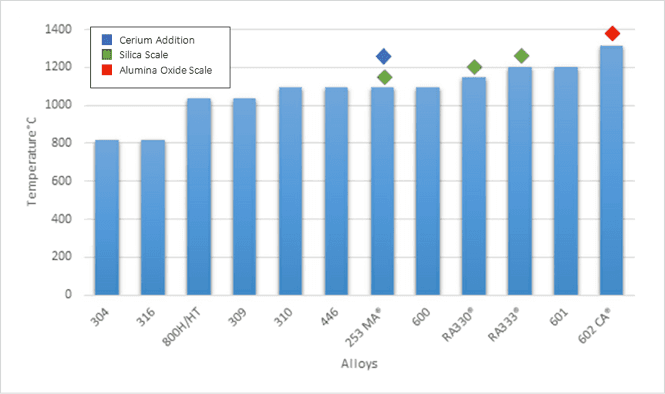
The maximum suggested operating temperature varies between heat-resistant alloys. The chart below features some of the high-temperature alloys stocked by NeoNickel, alongside the different alloying additions used to support oxidation resistance.
The coloured markers indicate:
- Green: Chromium and silicon
- Red: Aluminium in addition to chromium
- Blue: Cerium and silicon in addition to chromium
Looking for an Oxidation-Resistant Alloy?
NeoNickel stocks a range of high-performance and heat-resistant alloys including Alloy 310S a high-performance austenitic stainless steel, Alloy 310S is engineered for superior oxidation resistance and structural stability in extreme high-temperature environments up to 1094°C. (https://www.neonickel.com/alloys/all-alloys/alloy-310s)
If you need help identifying a suitable material for your requirements, speak to our experienced team for technical advice and support.
