
Hastelloy X vs Inconel 625: Which Alloy Performs Better in High-Temperature Applications?
When selecting materials for extreme operating environments, understanding the differences between high-performance nickel alloys is essential. Hastelloy X and Inconel 625 are both widely used across aerospace, industrial processing and chemical applications thanks to their excellent resistance to heat, oxidation and corrosion.
However, while both alloys perform well in demanding environments, they are designed with different priorities in mind. Hastelloy X is often selected for its exceptional oxidation resistance and thermal stability in high-temperature environments, while Inconel 625 is valued for its high mechanical strength and superior corrosion resistance.
But when it comes to Hastelloy X vs Inconel 625, which alloy performs better in high-temperature applications?
In this detailed comparison, we'll explore:
- How Hastelloy X and Inconel 625 perform under thermal stress
- Their mechanical and corrosion-resistant properties
- Typical industrial use cases
- Key considerations to help you choose the right alloy for your application
What Are Hastelloy X and Inconel 625?
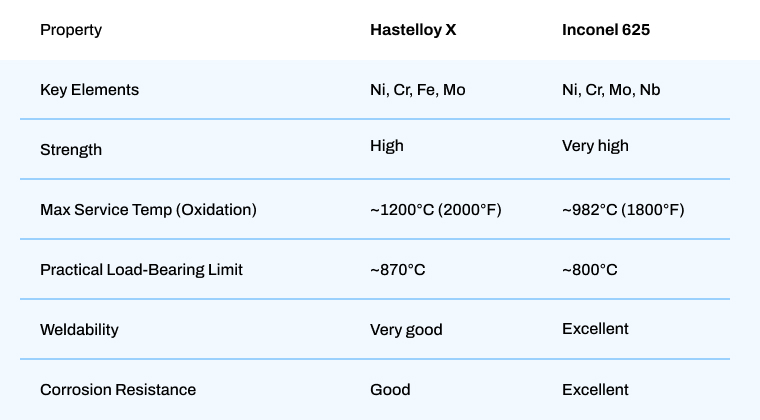
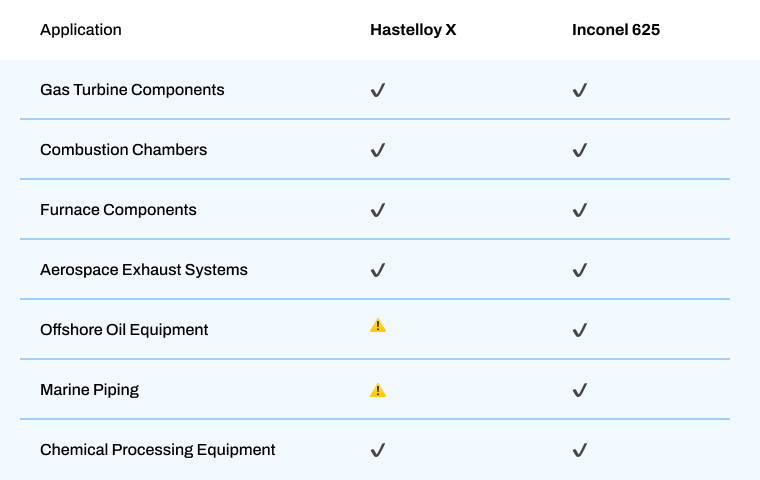
Hastelloy X (UNS N06002) A nickel-chromium-iron-molybdenum alloy developed for exceptional oxidation resistance and high-temperature strength. Hastelloy X is commonly used in gas turbine engines, furnace components and combustion zone applications exposed to prolonged heat and thermal cycling.
Inconel 625 (UNS N06625) A nickel-chromium-molybdenum-niobium alloy offering excellent mechanical strength and superior corrosion resistance across a wide range of aggressive environments. Inconel 625 is particularly known for its performance under combined thermal and mechanical stress.
High-Temperature Performance
Hastelloy X
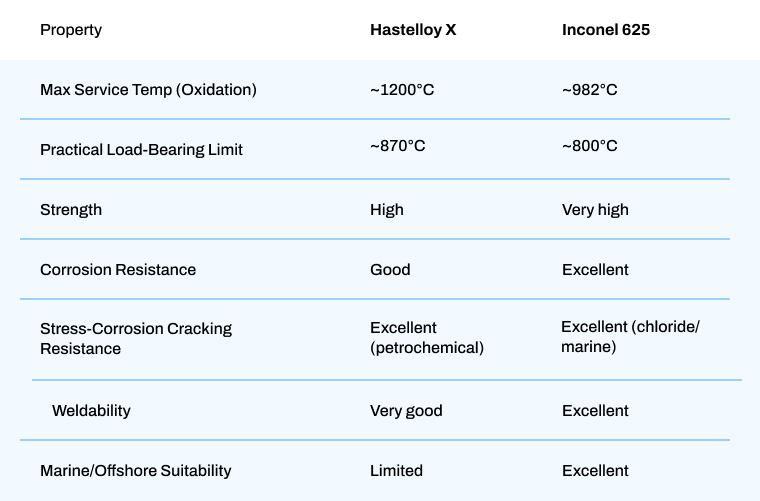
- Exhibits exceptional oxidation resistance up to approximately 1200°C (2200°F), with high mechanical strength - retained at temperatures slightly below this maximum
- Excellent resistance to oxidation and thermal fatigue
- Resistant to carburisation in furnace environments
- Commonly used in combustor cans, afterburners and transition ducts
Inconel 625
- Offers excellent tensile strength at elevated temperatures
- Maintains mechanical integrity under sustained thermal and mechanical stress
- Resistant to oxidation and scaling
- Continuous service rating up to approximately 982°C (1800°F) for oxidation resistance, though for load-bearing applications the practical upper limit is closer to 800°C, where meaningful yield strength is retained
- Frequently used in aerospace exhaust systems, heat exchangers and high-pressure systems
Conclusion: If the priority is maximum oxidation resistance and thermal stability at very high temperatures, Hastelloy X is often the preferred choice. However, when applications require high strength combined with elevated-temperature and corrosion performance, Inconel 625 is typically the stronger option.
Corrosion Resistance
Hastelloy X
- Good resistance in oxidising high-temperature environments
- Performs well in combustion gases and furnace atmospheres
- Exceptionally resistant to stress-corrosion cracking in petrochemical applications, a meaningful differentiator in high-temperature hydrocarbon environments
- Suitable for thermal processing systems and industrial heating equipment
- Not typically selected for highly aggressive marine or chloride-rich environments
Inconel 625
- Superior resistance to pitting, crevice corrosion and chloride stress corrosion cracking
- Performs well in marine, offshore, acidic and sour gas environments
- Molybdenum and niobium additions improve corrosion resistance
- Widely used in chemical processing and offshore oil and gas systems
Conclusion: While both alloys offer strong oxidation resistance, Inconel 625 provides greater protection in aggressive corrosive environments, particularly where chlorides, seawater or chemical exposure are involved.
Mechanical Strength Comparison
Typical Room-Temperature Mechanical Properties (Solution-Annealed Condition)
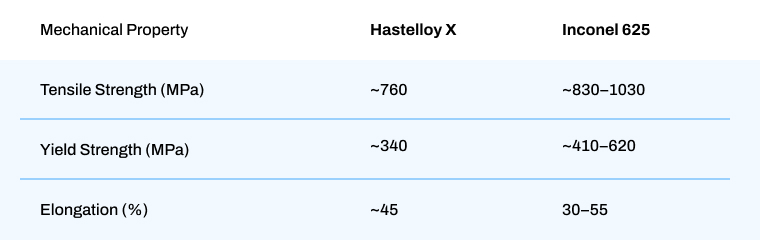
Values shown are typical of annealed plate and sheet. Cold-worked or solution-treated conditions can yield significantly higher strength values, and minimum specification values may differ depending on product form and applicable standard.
Conclusion: Inconel 625 offers significantly higher tensile and yield strength, making it suitable for pressure vessels, marine systems and load-bearing components operating under thermal stress.
Weldability & Fabrication
Both alloys are:
- Weldable using standard methods including TIG, MIG and resistance welding
- Capable of being cold-formed and fabricated into complex components
- Suitable for high-temperature industrial applications
Note on weldability: Both alloys weld readily; Inconel 625 is generally considered to have slightly easier welding characteristics due to niobium's stabilising effect against sensitisation.
Note on machinability: Inconel 625's higher mechanical strength can increase tooling wear during machining compared with Hastelloy X. This is a separate consideration from weldability and often makes Hastelloy X preferable for fabricated furnace and combustion assemblies where extensive machining is required.
Typical Applications
Cost and Availability
- Hastelloy X is often selected for high-temperature oxidation environments where thermal stability is the main requirement
- Inconel 625 generally carries a higher cost, but offers greater versatility in corrosive and high-pressure applications
Selection Tip: If your project operates primarily in extreme heat and oxidising environments, Hastelloy X may be the better choice. If long-term corrosion resistance and high mechanical strength are priorities, Inconel 625 may justify the additional cost.
Hastelloy X vs Inconel 625: Summary
Bottom Line:
- Choose Hastelloy X for applications requiring exceptional oxidation resistance and long-term thermal stability at elevated temperatures.
- Choose Inconel 625 when high strength and corrosion resistance are critical, particularly in marine, offshore and chemically aggressive environments.
Further Resources
- Alloy X Product Page
- Alloy 625 Product Page
- Alloy 625 Explained: A Technical Breakdown of Composition, Properties & Performance
Need Help Selecting the Right Alloy?
Still unsure which alloy is right for your application? Contact NeoNickel's alloy specialists to discuss operating temperatures, corrosion resistance requirements and material performance for your project.
